Silhouette
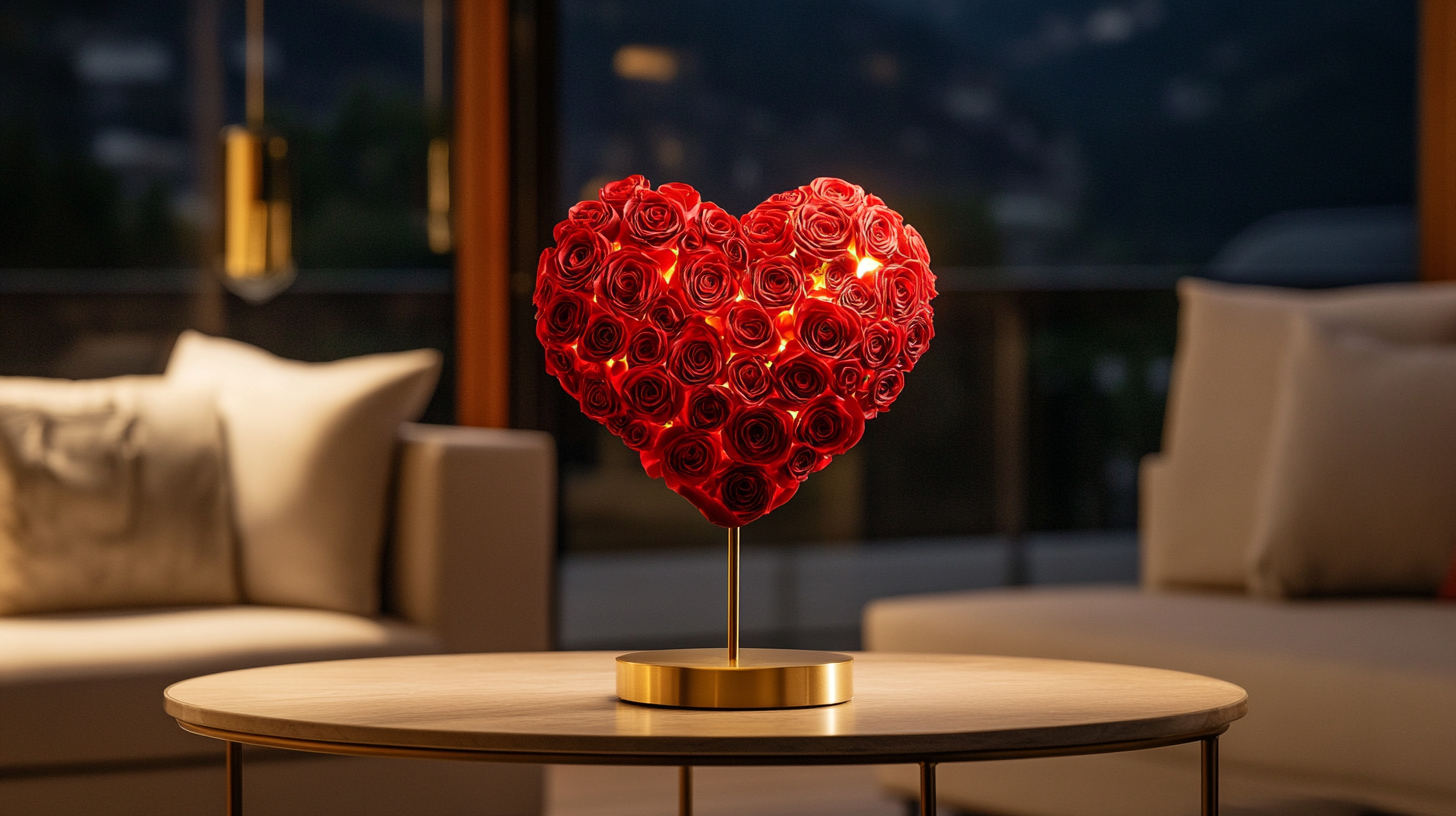
The outer edge makes a heart, bear, letter, dress, bouquet, or sculpture recognizable before its details are read.
Material & Making
Preserved roses are real botanical material transformed for long-term indoor display. Imaginary Worlds uses that material in objects with different structures, scales, and functions.
Preservation & object-making
Preservation allows the rose to remain dimensional without vase water. It retains recognizable petal structure and floral texture.
Commercial preservation methods vary; this page does not claim one proprietary recipe. Imaginary Worlds’ design language begins with the resulting preserved material and the structure that gives it another role.

Surface & structure
A supported silhouette establishes the scale, edge, and intended viewpoints. Rose placement then determines whether that structure disappears beneath flowers or remains part of the composition.
Boxes, lamps, characters, Ramo Buchón, dress forms, and sculpture require different relationships between support and floral surface.
Selection & composition
The outer edge makes a heart, bear, letter, dress, bouquet, or sculpture recognizable before its details are read.
Closer repetition reads as a continuous floral surface; open spacing makes individual blooms more legible.
A single color clarifies form; multiple colors can create contrast, symbols, gradients, or focal points.
Tabletop keepsakes and room-defining objects ask for different viewing distances, support, and visual rhythm.
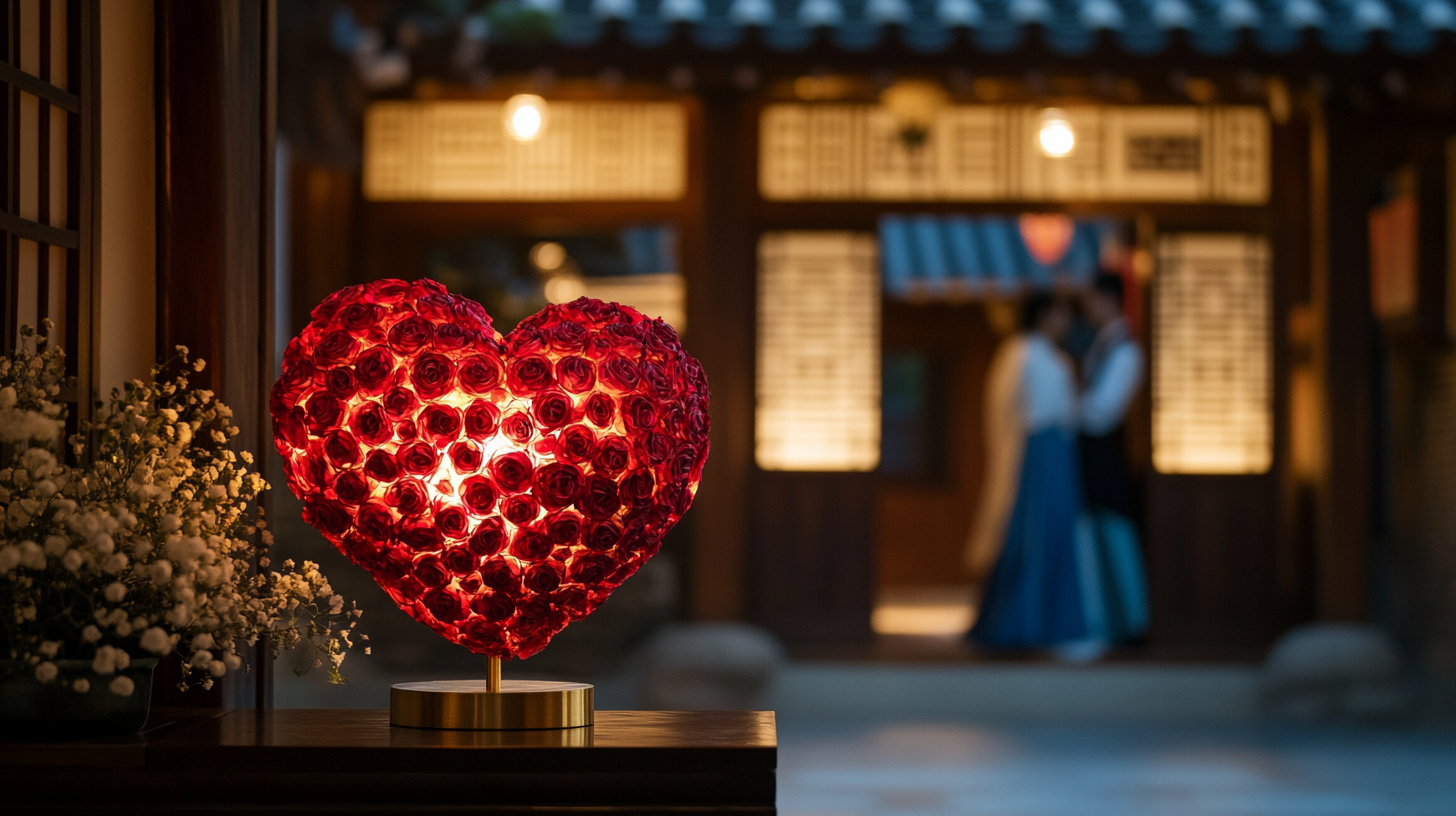
Illumination can reveal petal relief, change edge definition, and extend an object into the atmosphere around it.
A frontal box, freestanding character, or volumetric sculpture must communicate from its intended angles.
Light as a material
In the Light Collection, the rose is both visible surface and part of a luminous object. Light can emphasize texture, sharpen or soften the silhouette, and give the work presence beyond its physical outline.
This is a design distinction, not an electrical specification. Current controls, sizes, and supported options belong to each individual lamp design.
Care for the complete object
A preserved rose is no longer living, and its appearance changes with environment and handling.
Display indoors. Do not water or mist the preserved roses, and protect the complete object from moisture.
Avoid prolonged direct sunlight, strong heat, and repeated touching of the floral surface.
Use design-specific guidance for lighting, acrylic, photographs, fabric, electronics, or larger structural supports.
From material to world
Explore how the same botanical material moves through Memory, Light, Character, Couture, Abundance, and Form.