How botanical material, structural cores, scale, and silhouette create floral objects beyond the bouquet.
By Imaginary Worlds Editorial
Floral Art · The IW Journal
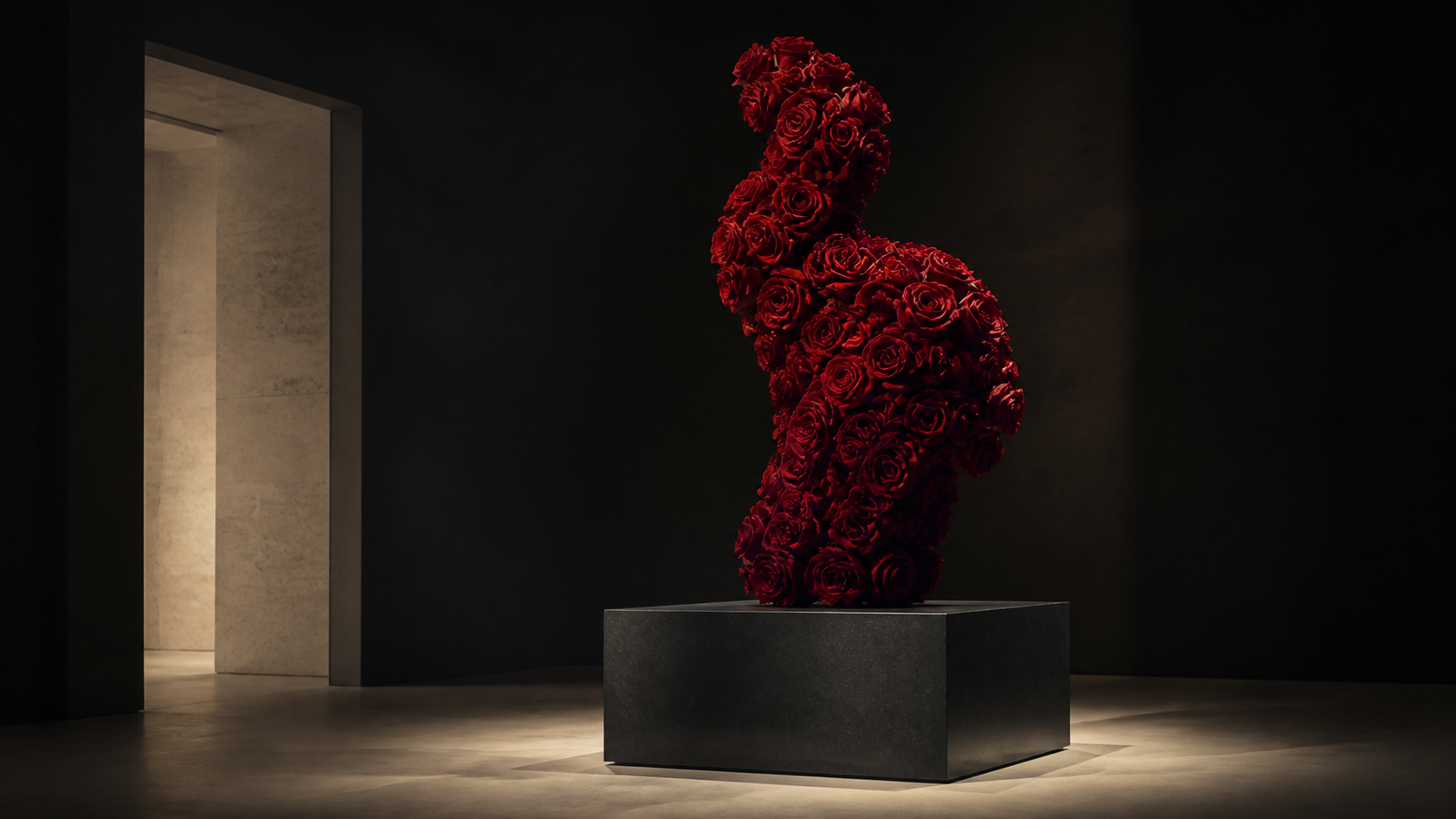
A preserved rose sculpture uses real preserved flowers as material within a designed three-dimensional form. The roses do not create that form alone. A structural core establishes volume, balance, and silhouette; selected flower heads create the visible surface; placement resolves edges and details. The result can be a bear, cat, dog, bag, pair of wings, dress, carousel, architectural object, or another recognizable form.
This distinction separates sculpture from arrangement. A bouquet is organized through stems, binding, vessel, and outward floral movement. A sculptural object is organized around a core that must remain legible beneath the flowers.
Floral sculpture in gallery light
Material follows structure
The core carries weight and defines the object before the first rose is placed. Rounded volumes suit a classic bear or giant bear. Pointed ears and a narrower body are essential to a cat. A Bichon or golden dog depends on head, muzzle, ear, and body proportions. A carousel or Paris-inspired architectural form requires repeated structural lines that remain visible from more than one angle.
Preserved roses then soften that geometry without being asked to conceal every decision. The maker controls density, orientation, and transitions so the eye reads the intended object first and individual blooms on closer inspection.
How form changes the floral problem
Rose Bear
Rounded head, body, and limb volumes support a familiar character at approachable or giant scale.
Animal and pet forms
Ears, muzzle, face, and stance require enough physical scale for the species and character to remain legible.
Rose Bag
Handle, body, and opening translate a fashion-object silhouette into a display sculpture rather than a functional handbag.
Rose Dress
Bodice, waist, skirt, and stance create a garment-scale floral sculpture intended primarily for display.
Angel Wings
Bilateral symmetry and feather-like edge rhythm give a winged form its graphic presence.
Carousel and architectural forms
Repeated lines, openings, and vertical elements must survive the added visual density of the rose surface.
Rose-head scale and visible detail
Rose-head size is an engineering choice. Smaller blooms can resolve an ear, paw, wing edge, handle, or architectural opening with greater control. Larger blooms create fuller volume across broad surfaces. The useful size depends on the physical model and the distance from which it should be recognized; no single bloom diameter is superior for every form.
Scale also establishes a lower boundary. If a small version loses the outline or detail shown by the larger model, discontinuing that size can be more truthful than preserving a nominal option that no longer represents the design clearly. A giant Rose Bear presents the opposite problem: support, weight, transport, viewing distance, and evenness across a much larger surface become decisive.
Natural variation within a repeatable model
A structural model can be repeated, but preserved roses are not mechanically identical units. Natural variation appears in bloom diameter, openness, petal edge, and color absorption. Selection and placement manage that variation while keeping contours and features readable.
This means two objects built from the same model can share proportions without having identical floral surfaces. The structure provides consistency; botanical variation keeps the material visibly natural.
Acrylic and display
An acrylic case can protect a delicate surface from repeated handling and reduce dust while making the boundary of the object explicit. It also changes viewing: reflections, seams, base height, and the space around the sculpture become part of the presentation. Acrylic is therefore a display system, not proof of artistic or material quality by itself.
A case does not remove care requirements. Preserved flowers should remain indoors, dry, away from direct sunlight, strong heat, and unnecessary touching. Specific care and material claims must follow the verified construction of the individual object.
Made-to-order sculpture
Made-to-order sculptural floral objects are built around a defined physical form rather than assembled as loose inventory. Complexity depends on core construction, flower selection, surface area, edge detail, color pattern, enclosure, and transport requirements. Current product and collection pages should remain the source for availability and timing; a general guide should not convert one product's schedule into a universal promise.
Choose by silhouette first, then scale, viewing environment, color, and the level of detail that matters. A character form may feel direct and familiar. A bag or dress may be read through fashion. Wings or a carousel can be more architectural. The better choice is the form whose physical identity remains clear without relying on exaggerated art-market language.
Explore preserved rose sculpture worlds
Move from the material and structural principles to the collection world that best matches the intended form.