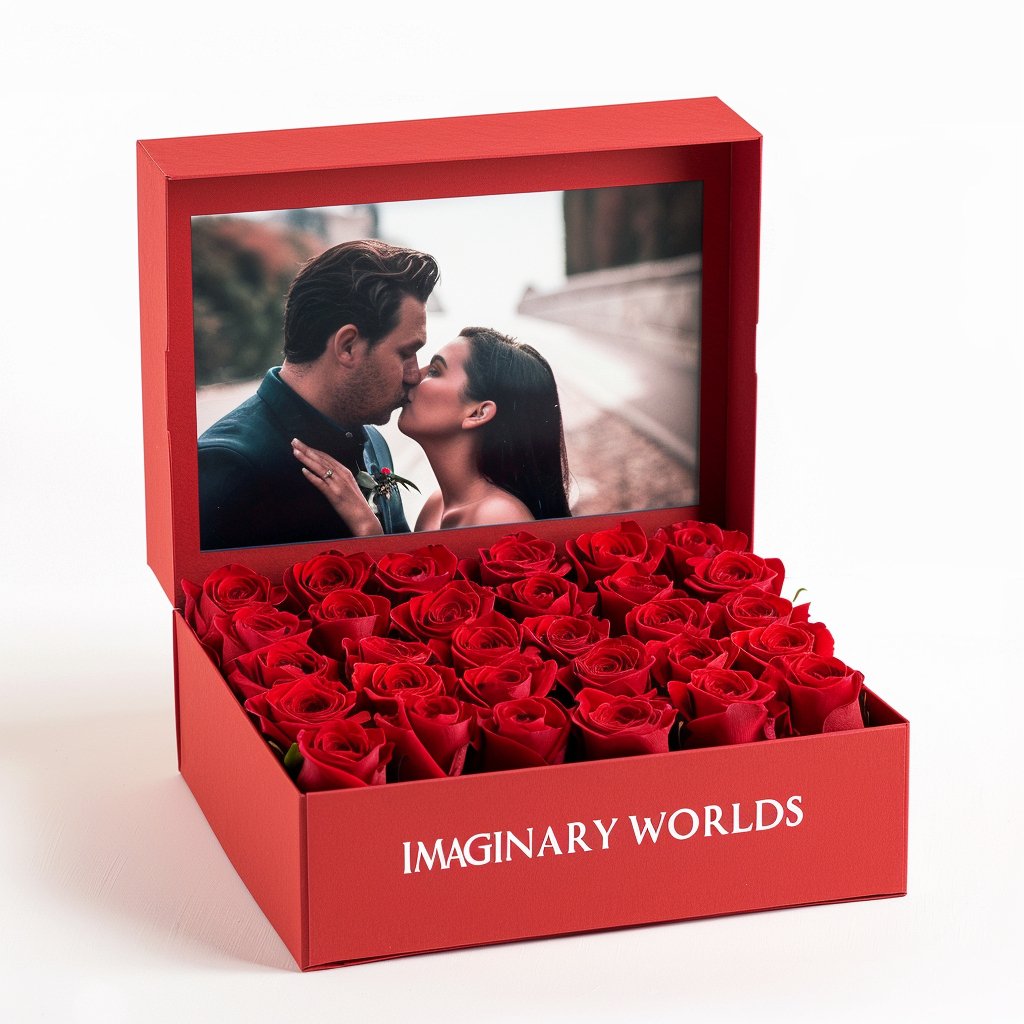
How preserved roses, photographs, colors, letters, numbers, and forms can give a memory a considered physical presence.
By Imaginary Worlds Editorial
Gifting · The IW Journal
Personalization is most useful when it makes an object more specific to a person or memory. A photograph can identify a shared moment. A number can hold a date or private reference. A letter can point to a person, place, or phrase. Color and form can recall a room, a tradition, or a preference known by the giver. None of these elements is meaningful merely because it can be selected.
Imaginary Worlds uses preserved roses in objects designed to remain present after the exchange. Within the Memory Collection, photographs, letters, numbers, palettes, and box structures can carry different kinds of memory. The right choice begins with the meaning to be held, then narrows to a design whose verified options can express it honestly.
What personalization means
Customization changes a product from a standard configuration: choosing a listed color, size, letter, or number is a catalog-defined customization. Personalization is the larger act of deciding why that choice belongs to this recipient. The same red rose box can be generic in one context and deeply personal in another because of the photograph, date, story, or private association surrounding it.
Customer-entered personalization is narrower and must be treated precisely. A text field, image upload, dedication, name, or custom message exists only when the current product experience explicitly provides it or the brand confirms a separate process. A design title containing words such as photo, custom, or personalized does not by itself prove that every input can be submitted through the live selector. Always read the individual design page and its current availability before planning the gift around an unverified capability.
Five ways a keepsake can become personal
Photograph
An image gives the object a specific referent: a person, place, event, or relationship. Check the individual design page for the current photo process; do not assume that every photo-box identity includes a live upload field.
Letter
An initial can be read quickly while retaining private meaning. It may represent a name, shared place, or phrase, but only designs with a verified letter selector should be chosen for a specific character.
Number
A number can hold a date, age, milestone, address, or personal symbol. Verified number choices are configuration options, not evidence that the number carries one universal spiritual meaning.
Color
A palette can recall taste, place, ceremony, or a private association. Color is commonly catalog-defined, and available combinations vary by design rather than applying across the whole Collection.
Form
Heart, round, rectangular, letter-led, number-led, and photographic formats change how a keepsake is encountered. Choosing the right physical structure can be more personal than adding more visible information.
Personal memory preserved with roses
Why preserved roses suit keepsakes
Fresh roses are valued partly for their living change: they open, carry fragrance, and pass through a brief vase life. Preserved roses answer a different design brief. Their botanical form is stabilized, they need no water, and they can be composed within boxes and structured objects intended for longer indoor display.
That extended presence can support remembrance because the floral material remains near the photograph, symbol, or message it was chosen to accompany. It should not be described as permanent. Humidity, direct sun, heat, dust, handling, dyes, cases, adhesives, and companion materials all affect how an object ages. The preserved-rose care guidance explains those limits without attaching an unsupported lifespan promise to every keepsake.
Choose the memory before the options
Begin with one sentence that names what the object should hold: a shared journey, a family photograph, a date, an achievement, or simply the recipient's visual taste. If the sentence is unclear, additional initials and symbols will not make the gift more precise. If it is clear, one well-chosen element may be enough.
Next decide how visible the memory should be. A photograph is explicit. An initial or number can remain legible mainly to the people involved. A palette may be understood only through context. Privacy matters: obtain permission to use personal images, and avoid turning grief, health, reconciliation, or another intimate experience into public decoration without knowing that visibility is welcome.
Match intention to a real design
After defining the memory, compare physical formats. Photo Rose Boxes place an image and preserved floral composition in direct relationship. Number and Letter Rose Boxes use a graphic sign as part of the floral object. Classic formats can prioritize palette, scale, or box treatment. These are different design systems, not interchangeable keyword variations.
Then inspect the selected design's live controls. Catalog-defined selectors show what can currently be configured online. A design may also be temporarily unavailable while remaining a genuine IW object; in that case, the page documents the design but does not promise a purchasable configuration. Do not infer that an option observed elsewhere in the family applies to every design.
Representative Memory designs
These commerce-ready destinations demonstrate four different relationships between memory and configuration. Their live selectors remain the authority for what can be chosen now.
A keepsake does not need a photograph, name, date, message, number, and symbolic color at once. Too many explicit signals can make the object harder to read and can shift attention away from the memory itself. Restraint gives each chosen element room.
Generic customization asks how many features can be added. Considered personalization asks which detail the recipient will recognize and want to live with. Sometimes that is a photograph. Sometimes it is a single initial, an exact number, or a color with no public explanation. The design should carry the memory without forcing it to perform for everyone who sees it.
Understand the material and symbolism
Use the existing Journal authority for care and color context rather than treating a product page as a complete material guide.
Personalization is not the number of choices added to an object. It is the accuracy with which one choice holds a memory.
The Memory Collection
The Memory Collection brings preserved roses into box formats shaped around keeping and return. Photo, number, letter, heart, classic, and other genuine structures offer different ways to make memory physical without turning each color, recipient, occasion, or symbol into a separate product identity.
Use the Collection as the complete discovery layer, then move from family to individual design. That path protects an important distinction: the family explains the format; the genuine design shows its own physical identity and current commerce truth. The result is a keepsake chosen through meaning and evidence, not a generic personalization promise.